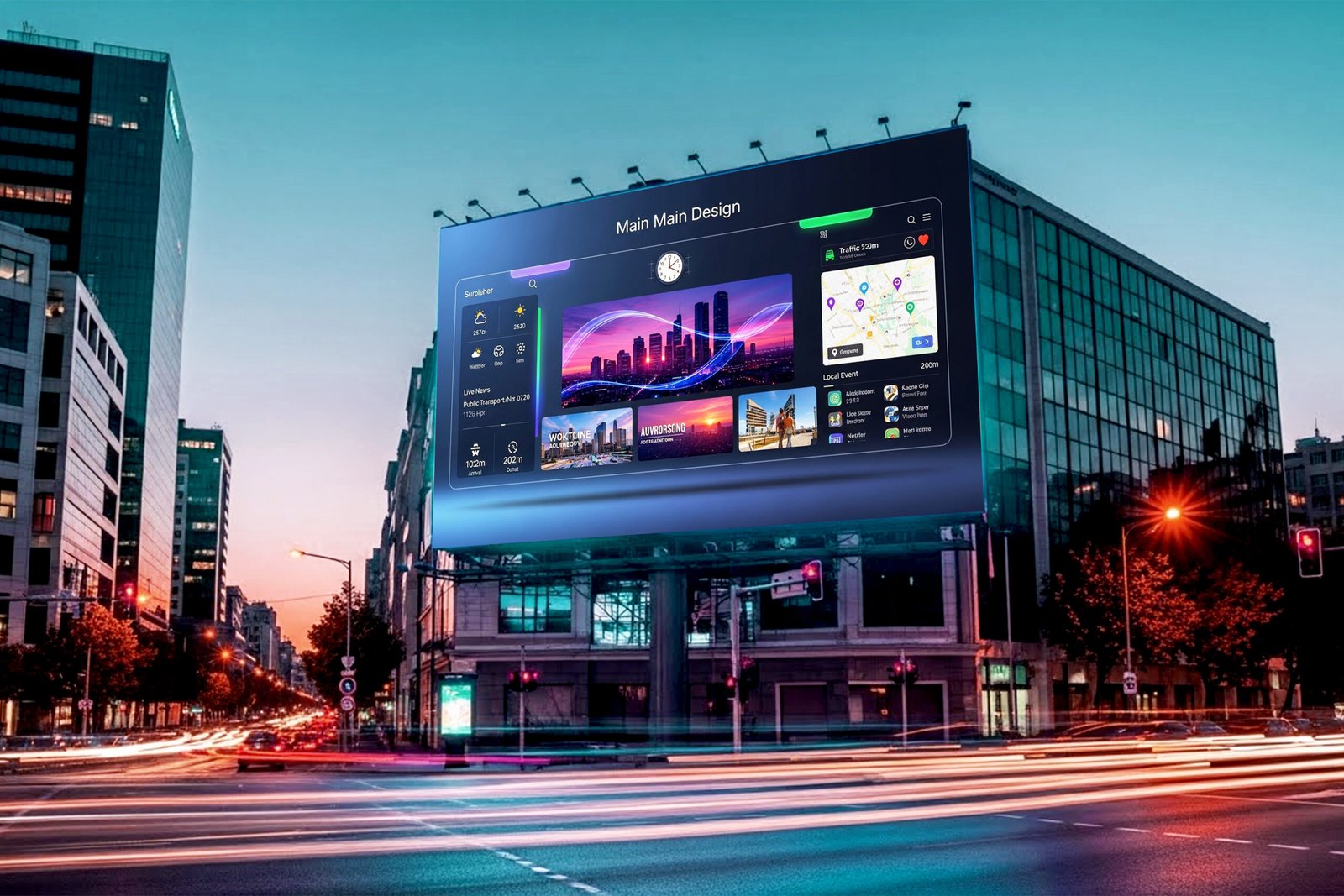
Digital billboards are transforming the world of outdoor advertising. With bright LED screens, dynamic content, and smart technology, digital billboards allow brands to communicate more effectively and creatively with their audience. They combine the power of traditional billboards with the flexibility of digital media.
In this blog, we’ll explore what digital billboards are, how they work, their benefits, types, design tips, and best practices.
What Are Digital Billboards?
Digital billboards are electronic outdoor advertising displays that use LED or LCD screens to show advertisements. Unlike traditional static billboards, digital billboards can rotate multiple ads, display animations, and update content remotely in real time.
They are commonly placed in high-traffic areas such as highways, malls, airports, city centers, and busy intersections.
How Digital Billboards Work
Digital billboards use LED panels connected to a content management system (CMS). Advertisers can schedule ads, change creatives, and control display times remotely. Ads usually appear in time slots ranging from 5 to 15 seconds, rotating with other advertisers.
Why Digital Billboards Are So Effective
1. High Visual Impact
Bright colors, motion, and animations naturally attract attention, even from long distances.
2. Flexible Content Updates
Ads can be updated instantly without printing or reinstallation.
3. Multiple Ads, One Screen
One digital billboard can display several brands in rotation, making it efficient and profitable.
4. Time & Location Targeting
Content can change based on time of day, traffic, weather, or special events.
5. Eco-Friendly Option
No paper or vinyl printing is required, reducing material waste.
Types of Digital Billboards
1. Roadside Digital Billboards
Large LED screens placed along highways and main roads for mass exposure.
2. Urban Digital Billboards
Found in city centers, intersections, and commercial areas with high foot traffic.
3. Indoor Digital Billboards
Located inside malls, airports, metro stations, and corporate buildings.
4. Mobile Digital Billboards
LED screens mounted on trucks or vans that move through targeted locations.
Design Tips for Digital Billboards
1. Keep It Simple
Even with animation, the message must be clear within a few seconds.
2. Use Motion Wisely
Subtle animations work better than fast or flashy movements.
3. Large, Readable Text
Text should be visible from a distance and at high speeds.
4. High Contrast Colors
Ensure strong contrast between background and text.
5. Short Call-to-Action
Use simple CTAs like a website URL or brand name.
Advantages of Digital Billboards
-
Dynamic and eye-catching content
-
Easy and fast content updates
-
Better audience engagement
-
Smart scheduling and targeting
-
Long-term cost efficiency for multiple campaigns
Challenges to Consider
-
Higher initial cost
-
Requires power and technical maintenance
-
Content overload can reduce impact
-
Regulations in some cities
